
7 Mistakes New Landscaping Business Owners Make—and How to Avoid Them
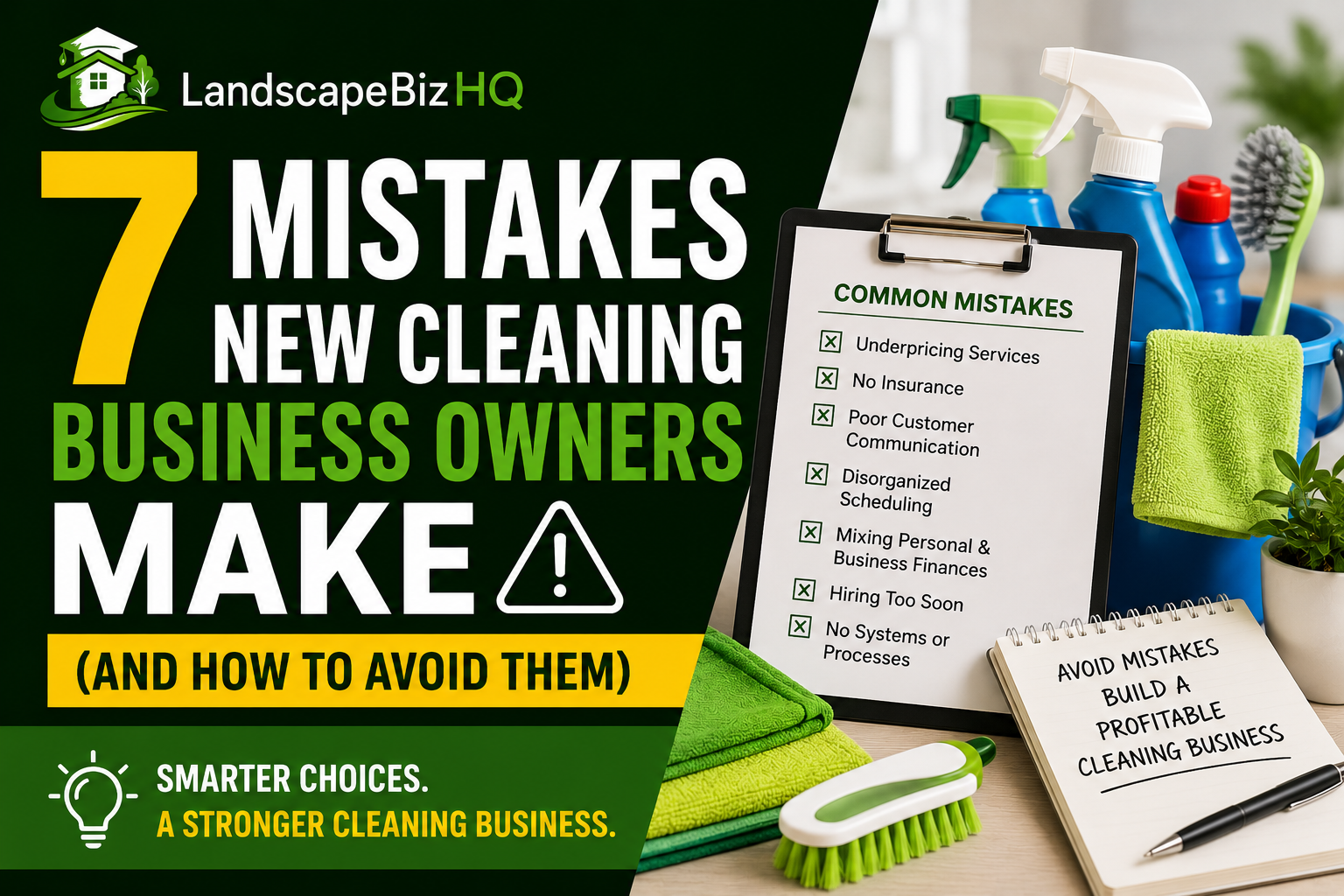
Starting a landscaping business can create recurring revenue and long-term growth, but early mistakes can drain cash, create scheduling problems, and make the company harder to manage.
These seven common landscaping business mistakes involve equipment, pricing, services, insurance, finances, systems, and hiring. Here is how to avoid them before they become expensive problems.
Quick Answer
The biggest mistakes new landscaping business owners make are buying too much equipment too soon, charging too little, offering too many services, operating without the right insurance or licenses, mixing personal and business money, relying on memory instead of systems, and hiring before cash flow can support payroll.
A stronger approach is to begin with a focused service list, buy only essential equipment, price every job for profit, protect the business properly, separate finances, create repeatable systems, and hire only when recurring revenue supports growth.
1. Buying Too Much Equipment Too Soon
New owners often believe they need a commercial mower, enclosed trailer, specialty tools, and backup equipment before they have a steady customer base.
That can create equipment payments, insurance costs, maintenance expenses, and storage needs before the business has enough recurring revenue to support them. A machine that sits unused still costs money.
How to avoid it
Start with the equipment required for the services you can realistically sell now. Use reliable equipment you already own, purchase dependable used equipment when appropriate, and rent specialty machines by the job.
Reinvest profits into upgrades after demand proves the equipment will be used consistently. Our landscaping business equipment list can help you separate essential tools from future upgrades.
2. Charging Too Little
Underpricing is one of the most damaging mistakes in a landscaping business. New owners may copy a competitor’s price or quote what they believe a customer will accept without calculating the full cost of the job.
Your price must account for labor, payroll taxes, materials, fuel, travel, equipment use, repairs, insurance, software, overhead, and profit. A full schedule does not help if the jobs are not profitable.
How to avoid it
Estimate labor hours, materials, travel, equipment use, overhead, and required profit before sending a quote. After completing the job, compare the actual time and expenses with your estimate.
Our guide on how to price landscaping jobs explains how to build prices around real costs instead of guesswork.
3. Offering Too Many Services
Trying to offer lawn maintenance, installation, irrigation, drainage, tree work, hardscaping, chemical applications, and every other service from the beginning can spread a new company too thin.
Different services may require additional equipment, licensing, insurance, training, suppliers, estimating methods, and crew skills. Accepting work outside your experience can also create callbacks or property damage.
How to avoid it
Begin with services that match your equipment and experience. A new company might start with mowing, trimming, edging, blowing, shrub maintenance, and seasonal cleanups before expanding into installation work.
Add new services only after the original operation is profitable, organized, and capable of maintaining consistent quality.
4. Operating Without the Right Insurance or Licenses
Landscaping work involves vehicles, trailers, power equipment, chemicals, customer property, and physical labor. A single accident can become expensive when the business is not properly protected.
Certain services may also require state or local licenses, permits, certifications, or registrations. Chemical applications, irrigation, tree work, and construction-related services may be regulated differently.
How to avoid it
Review the requirements for every service you plan to offer. Common coverage can include general liability, commercial auto, tools and equipment coverage, workers’ compensation, and an umbrella policy.
Read our landscaping business insurance guide for an overview of common policies and cost factors.
5. Mixing Personal and Business Finances
Using the same account for household and business spending makes it difficult to understand revenue, expenses, taxes, and profit. It also creates messy records when applying for financing or preparing tax information.
How to avoid it
Open a dedicated business bank account and use it for customer payments and company expenses. Track fuel, repairs, materials, equipment, insurance, software, payroll, taxes, and owner withdrawals consistently.
An online business checking account such as Bluevine may be worth considering for keeping operating money separate and organizing funds for taxes, equipment, and other planned expenses.
6. Relying on Memory Instead of Systems
Texts, paper notes, and memory may work with a few customers, but they become unreliable as the route grows. Missed appointments, forgotten estimates, late invoices, and lost customer details can damage the company’s reputation.
How to avoid it
Create a repeatable process for leads, estimates, customer information, recurring schedules, routes, job notes, crew assignments, invoices, payments, follow-up, and review requests.
A field-service platform such as Jobber can help organize customers, quotes, recurring work, schedules, invoices, and payments as the business grows.
7. Hiring Before Pricing and Cash Flow Are Ready
Hiring can help a landscaping company serve more customers, but payroll creates a fixed obligation even when weather delays work or customers pay slowly.
If prices are too low or routes are inefficient, adding employees can increase revenue while reducing profit.
How to avoid it
Before hiring, confirm that the business has consistent demand, profitable pricing, sufficient working capital, documented job procedures, training standards, quality-control systems, and a reliable scheduling process.
Plan for payroll taxes, workers’ compensation, uniforms, tools, training time, supervision, and reduced productivity during onboarding. Hire into an organized and profitable operation rather than expecting an employee to fix an unstable one.
A Better Way to Start
A new landscaping business does not need every service, machine, or employee on day one. It needs a strong foundation that can support controlled growth.
- Choose a focused and profitable service list.
- Buy only the equipment required for current demand.
- Price every job using labor, materials, overhead, and profit.
- Register and insure the business properly.
- Separate personal and business finances.
- Create repeatable estimating, scheduling, invoicing, and follow-up systems.
- Hire only when recurring revenue and cash reserves can support payroll.
For a complete startup roadmap, read How to Start a Landscaping Business in 10 Steps.
Final Thoughts
The most damaging landscaping business mistakes usually come from spending, expanding, or hiring before the company’s foundation is ready.
Start with essential equipment, focused services, profitable pricing, proper protection, organized finances, and dependable systems. Those decisions make it easier to deliver consistent work, protect cash flow, and grow without creating unnecessary pressure.
Frequently Asked Questions
What is the biggest mistake new landscaping business owners make?
Underpricing is one of the most damaging mistakes because it affects cash flow, equipment replacement, hiring, and profit. New owners should calculate labor, materials, travel, equipment costs, overhead, and profit before quoting work.
Should a new landscaping business buy commercial equipment immediately?
Not necessarily. Commercial equipment may improve productivity, but purchases should match confirmed demand and available cash. Many owners can begin with dependable equipment, rent specialty machines, and upgrade as recurring revenue grows.
When should a landscaping business hire its first employee?
Hiring makes the most sense when the business has consistent demand, profitable pricing, enough working capital for payroll, documented procedures, and a clear plan for training, scheduling, and quality control.
What systems does a new landscaping business need?
At minimum, a new landscaping business needs consistent systems for leads, estimates, customer records, recurring schedules, routes, job notes, invoices, payments, bookkeeping, follow-up, and review requests.