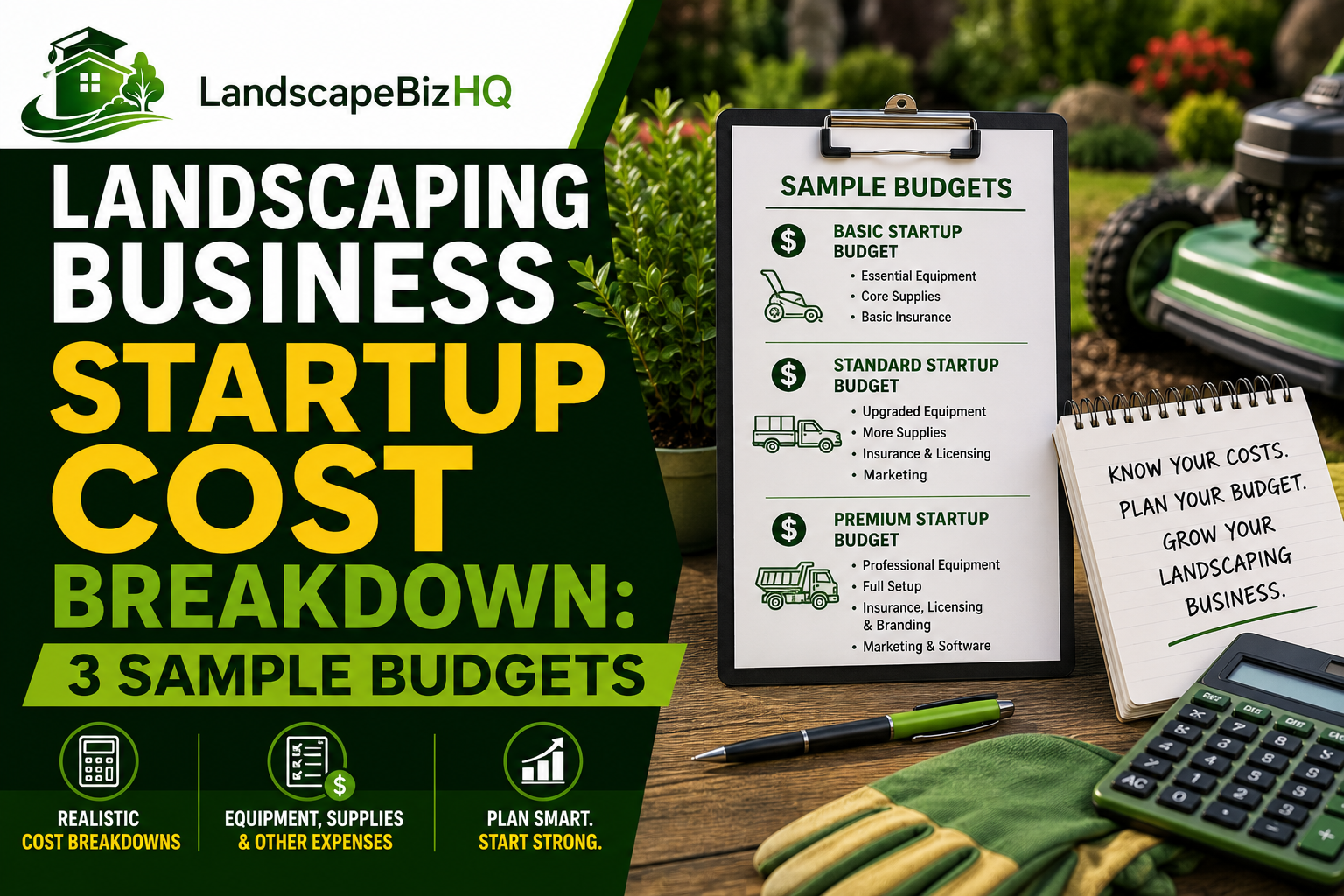
Landscaping Business Startup Cost Breakdown: 3 Sample Budgets
Starting a landscaping business can require anything from a few thousand dollars to tens of thousands of dollars. The amount depends on the services you plan to offer, the equipment and vehicle you already own, and how quickly you want to build a professional operation.
This breakdown provides three sample budgets: a lean solo startup, a professional lawn-care operation, and a full-service landscaping company. Use them as planning examples rather than fixed price quotes.
For a complete overview of equipment, registration, insurance, marketing, software, and operating expenses, read our guide explaining how much it costs to start a landscaping business.
Quick Answer
A lean landscaping startup may require approximately $2,000 to $5,000 when the owner already has a suitable vehicle and begins with basic lawn-care services.
A professional solo operation may require around $10,000 to $25,000. A full-service company purchasing a work truck, trailer, commercial mower, and installation equipment could require $30,000 to $50,000 or more.
Your actual cost will depend on local prices, equipment condition, insurance requirements, licensing, financing, and the amount of working capital you keep available.
Budget 1: Lean Solo Startup
Estimated budget: $2,000 to $5,000
This budget works best for an owner who already has a dependable vehicle and plans to begin with a limited service list. Typical early services may include mowing, trimming, edging, blowing, shrub maintenance, and small cleanups.
Sample Lean Startup Budget
| Expense | Estimated Cost |
|---|---|
| Used mower | $500–$1,500 |
| String trimmer | $150–$350 |
| Leaf blower | $150–$400 |
| Hand tools, fuel containers, and safety gear | $200–$500 |
| Registration, licenses, and permits | $100–$500 |
| Initial insurance payment | $150–$500 |
| Basic website and marketing | $100–$500 |
| Fuel and working capital | $300–$900 |
| Estimated total | $1,650–$5,150 |
The advantage of this approach is lower debt and fewer monthly payments. The tradeoff is that your service area, job size, and daily capacity may be limited until you upgrade equipment.
Buy only what supports the work you can sell now. Our landscaping business equipment list can help you separate essential tools from later upgrades.
Budget 2: Professional Solo Operation
Estimated budget: $10,000 to $25,000
This setup is better suited to an owner building a full-time lawn-maintenance or light-landscaping business. It may include a commercial mower, commercial handheld tools, a utility trailer, sprayers, stronger branding, software, and a larger cash reserve.
Sample Professional Startup Budget
| Expense | Estimated Cost |
|---|---|
| Commercial mower | $4,000–$10,000 |
| Trimmer, edger, and blower | $800–$2,000 |
| Utility trailer | $1,500–$4,000 |
| Hand tools, sprayers, and safety gear | $500–$1,500 |
| Registration, licenses, and permits | $200–$1,000 |
| Insurance deposits | $500–$2,000 |
| Website, branding, and marketing | $500–$2,000 |
| Software and office setup | $200–$1,000 |
| Fuel, maintenance, and reserve funds | $1,000–$3,000 |
| Estimated total | $9,200–$26,500 |
A professional setup can improve productivity and allow you to manage more recurring customers. However, purchasing every possible tool before demand exists can put unnecessary pressure on cash flow.
Once recurring work begins to grow, a field-service platform such as Jobber can help organize customer records, estimates, recurring schedules, invoices, and payments in one system.
Budget 3: Full-Service Landscaping Company
Estimated budget: $30,000 to $50,000 or more
A full-service company may offer lawn maintenance alongside landscape installation, mulch, sod, irrigation, drainage, hardscaping, commercial maintenance, and seasonal cleanup services.
This model may require a dedicated work truck, larger trailer, commercial mowing equipment, installation tools, material deposits, broader insurance coverage, and additional working capital.
Sample Full-Service Startup Budget
| Expense | Estimated Cost |
|---|---|
| Used work truck | $12,000–$30,000 |
| Commercial mower | $5,000–$12,000 |
| Open or enclosed trailer | $2,500–$7,000 |
| Handheld equipment | $1,500–$3,000 |
| Installation tools and specialty equipment | $1,000–$5,000 |
| Registration, permits, and licenses | $300–$1,500 |
| Insurance deposits | $1,000–$5,000 |
| Website, branding, and marketing | $1,000–$4,000 |
| Software and office equipment | $500–$2,000 |
| Working capital | $3,000–$10,000 |
| Estimated total | $27,800–$79,500 |
You do not need to own every specialty machine. Renting aerators, trenchers, skid steers, and similar equipment for individual projects can reduce startup costs until job volume supports ownership.
Costs That Are Easy to Underestimate
Truck and trailer expenses
The purchase price is only part of the cost. Include commercial auto insurance, fuel, registration, tires, repairs, routine maintenance, hitch installation, and financing charges.
Business formation and licensing
Your expenses may include business registration, LLC filing, local licenses, assumed-name registration, registered-agent service, and certifications required for regulated work.
Requirements differ by location and service. Our guide on how to structure a landscaping business explains the major formation, banking, insurance, accounting, and recordkeeping steps.
Insurance
Depending on your operation, you may need general liability, commercial auto, tools and equipment coverage, workers’ compensation, property coverage, or an umbrella policy. Vehicle count, payroll, services, location, limits, and claims history can all affect the cost.
Marketing
Plan for a website, domain, business cards, yard signs, door hangers, branded shirts, vehicle lettering, local advertising, photography, and review-generation efforts. Expensive equipment cannot produce revenue without customers.
Software and Administrative Expenses
A solo operator does not need every type of software on the first day. Start with the tools needed to keep customer information organized, send estimates, schedule recurring jobs, invoice customers, collect payments, and maintain accurate records.
- Customer relationship management
- Scheduling and route planning
- Estimates and invoicing
- Payment processing
- Accounting
- Payroll
- Email and text marketing
- Review management
Our landscaping business systems guide explains which processes and software become useful as the company grows.
Do Not Spend All Your Cash on Equipment
Working capital is the money available to keep the business operating after the initial purchases are complete. It may need to cover fuel, repairs, insurance payments, software, advertising, materials, dump fees, taxes, slow-paying customers, and weather-related cancellations.
Keeping business money separate can make cash flow easier to understand. An online business checking account such as Bluevine may be worth considering for organizing operating money and setting aside funds for taxes, equipment, or other planned expenses.
Avoid spending the entire startup budget before the first job. A smaller equipment package with a healthy reserve is often safer than an impressive setup with no money available for repairs or operating costs.
How to Lower Your Startup Budget
- Use a suitable vehicle you already own.
- Begin with a focused service list.
- Purchase dependable used equipment when appropriate.
- Rent specialty machines by the job.
- Reinvest early profits into upgrades.
- Work from home instead of leasing a shop.
- Keep the initial service area compact.
- Avoid backup equipment until revenue supports it.
Lower startup costs can reduce financial pressure, but unreliable tools can create downtime and missed appointments. Focus on dependable equipment and a realistic service plan rather than simply buying the cheapest option available.
Final Cost Comparison
| Startup Type | Planning Range | Best Fit |
|---|---|---|
| Lean solo startup | $2,000–$5,000 | Owner with a vehicle offering basic lawn services |
| Professional solo operation | $10,000–$25,000 | Full-time owner building recurring routes |
| Full-service company | $30,000–$50,000+ | Company purchasing a truck, trailer, and broader equipment |
These ranges are useful planning examples, but your budget should be based on your actual service list, local requirements, equipment needs, and available cash.
Build the business around work you expect to sell now—not every service you may eventually offer. Start with the essentials, protect your cash reserve, and expand as recurring revenue grows.
Frequently Asked Questions
Can you start a landscaping business with $5,000?
It may be possible when you already own a suitable vehicle, begin with a limited lawn-care service list, purchase used equipment, and keep marketing and administrative costs modest. The budget becomes much harder if you also need a truck, trailer, and commercial mower.
What is usually the largest landscaping startup expense?
A work truck, commercial mower, or combination of the two is often the largest expense. Owners should also include insurance, fuel, repairs, registration, financing, and trailer costs when estimating the real total.
Should you buy or rent landscaping equipment?
Frequently used equipment may make sense to own, while expensive specialty machines can often be rented until job volume supports purchasing them. Compare rental costs, expected use, maintenance, storage, transportation, and financing before deciding.
How much working capital should a landscaping startup keep?
The right amount depends on monthly expenses, weather risk, customer payment timing, and equipment reliability. At minimum, the budget should leave enough cash for fuel, insurance, repairs, marketing, software, materials, and unexpected delays after the equipment is purchased.